The tools Rasmus Lerdorf wrote for his online resume, and gave away
In 1994 Rasmus Lerdorf wrote a few small tools to track visits to his online resume. He gave the code away in June 1995, other people rebuilt it, and today PHP runs a large part of the web. He says he never meant to write a language.
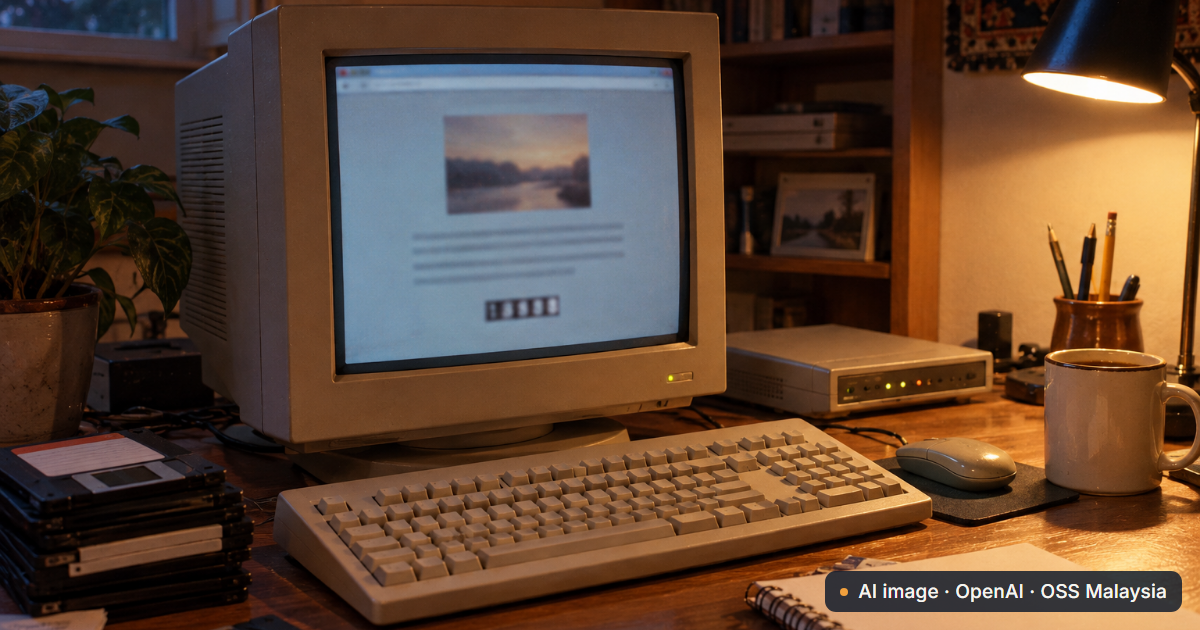
On 8 June 1995 a programmer named Rasmus Lerdorf posted a short announcement to an online discussion group for people who built web pages. The subject line read "Announce: Personal Home Page Tools (PHP Tools)". The tools, he wrote, were "a set of small tight cgi binaries written in C". In plain words: small programs that run on a web server each time someone opens a page.
His post ended: "The tools are in the public domain distributed under the GNU Public License. Yes, that means they are free!" Public domain and the GNU licence are not the same thing. We quote him as he wrote it.
That small set of tools became PHP, the software behind a large part of the world's websites today.
It started with his own online resume
PHP's own history page says Lerdorf created the first version in 1994, "originally used for tracking visits to his online resume". He named the set "Personal Home Page Tools", more often called "PHP Tools". Some other accounts, including a 2012 Computerworld report, put the start in 1993. We use the project's own date.
The 1995 announcement does not mention a resume. It lists what the tools did for "your pages": keep a private log of every visit, show daily and total visit counters, show when a page was last visited, protect pages with a password, and put forms on web pages. A guestbook, he wrote, took "about 2 minutes".
He gave the code away, and others improved it
The history page says that in June 1995 he "released the source code for PHP Tools to the public, which allowed developers to use it as they saw fit." Source code is the human-readable recipe of a program. With it, anyone could find faults and fix them. The history says this "permitted - and encouraged - users to provide fixes for bugs in the code, and to generally improve upon it."
Change came fast. By October 1995 there was a complete rewrite. In 1996 the new version, PHP/FI, could work with databases. By 1997 and 1998, the history says, it "had a cult of several thousand users around the world". In May 1998 a Netcraft survey found it on nearly 60,000 web addresses, about 1% of all web addresses on the internet at the time.
Until then, says the history, "it was still primarily developed by an individual."

Two developers in Tel Aviv rebuilt it
In 1997 Andi Gutmans and Zeev Suraski, in Tel Aviv, began rewriting part of PHP for an online shopping application they were building for a university project. They contacted Lerdorf online, and the three decided to work together.
PHP 3.0 was announced in June 1998 by "the new PHP Development Team". It came with a new name, "PHP: Hypertext Preprocessor". The history says the new name "removed the implication of limited personal use". PHP 3.0 let other people add their own parts to it, and it "attracted dozens of developers who submitted a variety of modules". The history calls this "the key to PHP 3.0's tremendous success." At its peak, PHP 3.0 ran on about 10% of the web servers on the internet.
He says he never meant to write a language
Lerdorf has said this more than once. At a conference in Portland in 2012 he said: "I had no intention of writing a language. I didn't have a clue how to write a language. I didn't want to write a language." He added: "I just wanted to solve a problem of churning out Web applications very, very fast."
At a talk in London in 2007 he was blunter: "I hate programming with a passion. It's boring. It's tedious. It's hard. I love solving problems."
In an interview with SitePoint he gave the credit away: "First, to be clear, I did not develop the PHP we know today. Dozens, if not hundreds of people, developed PHP. I was simply the first developer. PHP is very much a collaborative project." In the same interview: "PHP is about as exciting as your toothbrush. You use it every day, it does the job, it is a simple tool, so what?"
He is still involved
His own bio says he was an infrastructure architect at Yahoo! for more than seven years and then joined Etsy. His record on GitHub shows he still sends occasional fixes to PHP itself. The latest is dated 19 March 2026. In October 2026 he was busy on Phan, a tool that checks PHP code for mistakes.
On 30 October 2026, the web survey W3Techs found PHP behind 69.2% of the websites where it can identify the server's programming language. That is not 69.2% of all websites, because many sites do not show what they run. WordPress, which is written in PHP, is used by 39.5% of all websites, says the same survey. Both figures change daily.
What this means for your business
If your website was built with WordPress or another PHP system, it rests on tools one man wrote for his own resume page and then gave away. It also rests on the work of the many people who rebuilt them, and that work is still going.
On Monday, ask your web vendor what your website is built on, and who keeps that software up to date.
Sources
- PHP Manual, "History of PHP"
- Rasmus Lerdorf, "Announce: Personal Home Page Tools (PHP Tools)", comp.infosystems.www.authoring.cgi, 8 June 1995 (Google Groups archive)
- Joab Jackson, Computerworld, "PHP creator extolls language's modest start", 19 July 2012
- Tim Anderson, ITWriting, "Rasmus Lerdorf on security, hormones and PHP", 22 February 2007
- SitePoint, "PHP's Creator, Rasmus Lerdorf" (interview)
- Rasmus Lerdorf, bio
- PHP source code, changes by Rasmus Lerdorf (GitHub)
- Rasmus Lerdorf, GitHub profile and public activity (Phan), read 24 October 2026
- W3Techs, usage statistics of PHP for websites, 30 October 2026
- W3Techs, usage statistics of WordPress, 30 October 2026
Researched and drafted with AI, reviewed and published by a human.